

Introduction
Off-plan properties are purchased directly from developers before construction is completed. Buyers commit to a property based on architectural plans, unit number, layouts, and project specifications while following a payment schedule linked to construction milestones.
This type of purchase has become one of the most active segments of Dubai's real estate market. Flexible payment structures, early launch pricing, and the potential for value appreciation often attract both investors and long-term buyers.
However, buying off-plan also requires careful evaluation. Understanding the process, developer reputation, and long-term market fundamentals is essential before committing.
What Off-Plan Property Means
An off-plan property is a unit purchased during the development stage rather than after completion. Instead of transferring ownership immediately, buyers sign a Sale and Purchase Agreement (SPA) with the developer and follow a structured payment plan while construction progresses.
Payments are typically deposited into escrow accounts regulated by the Dubai Land Department, which are designed to protect buyer funds and ensure they are used only for project construction.
While this framework creates legal security, the long-term success of the investment still depends on project quality, location, and market demand.
Why Buyers Choose Off-Plan Properties
Many buyers consider off-plan projects because they offer financial and strategic advantages compared with ready homes.
Common benefits include:
Lower entry prices at project launch
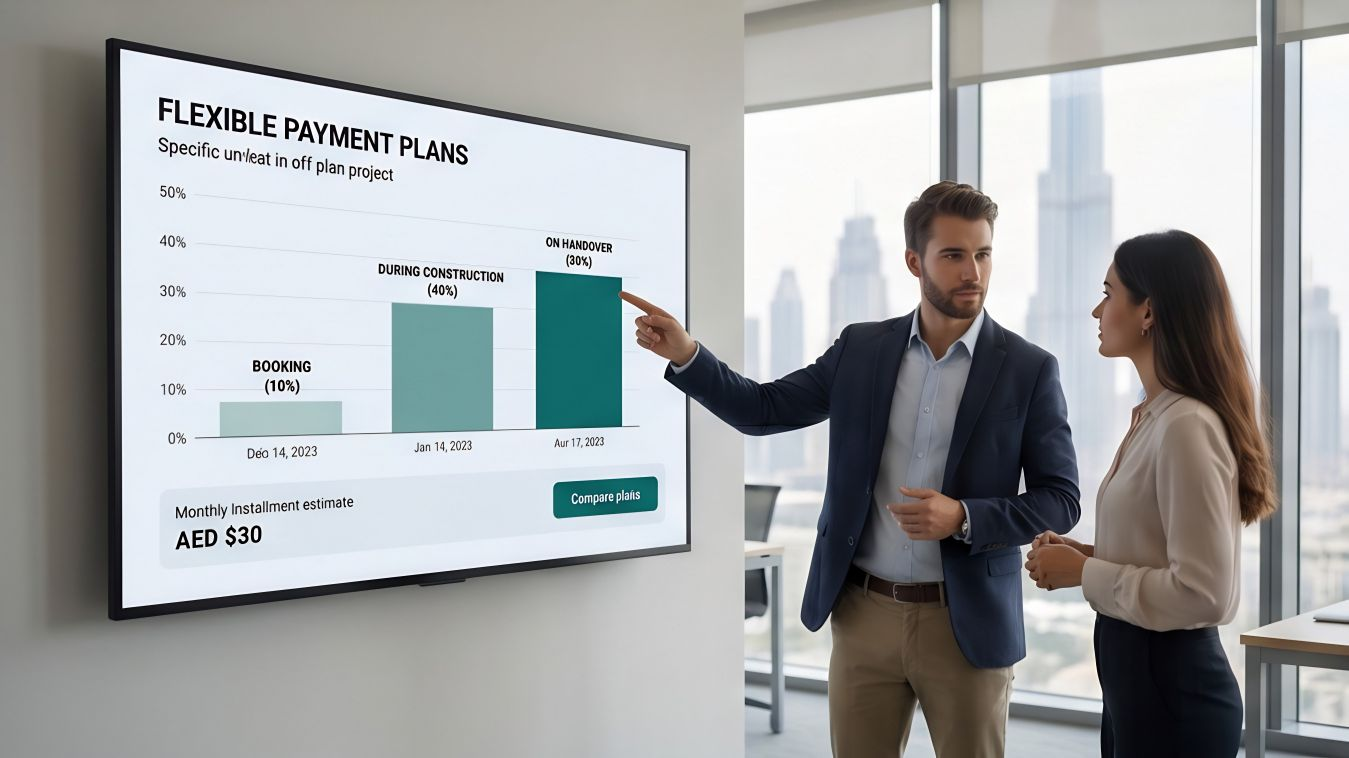
Flexible payment schedules during construction
Potential for value growth before completion
Access to newly built communities and modern amenities
For investors, off-plan purchases may allow capital appreciation between the launch phase and project handover. For end-users, they provide the opportunity to secure a new property in emerging districts.
The Off-Plan Buying Process
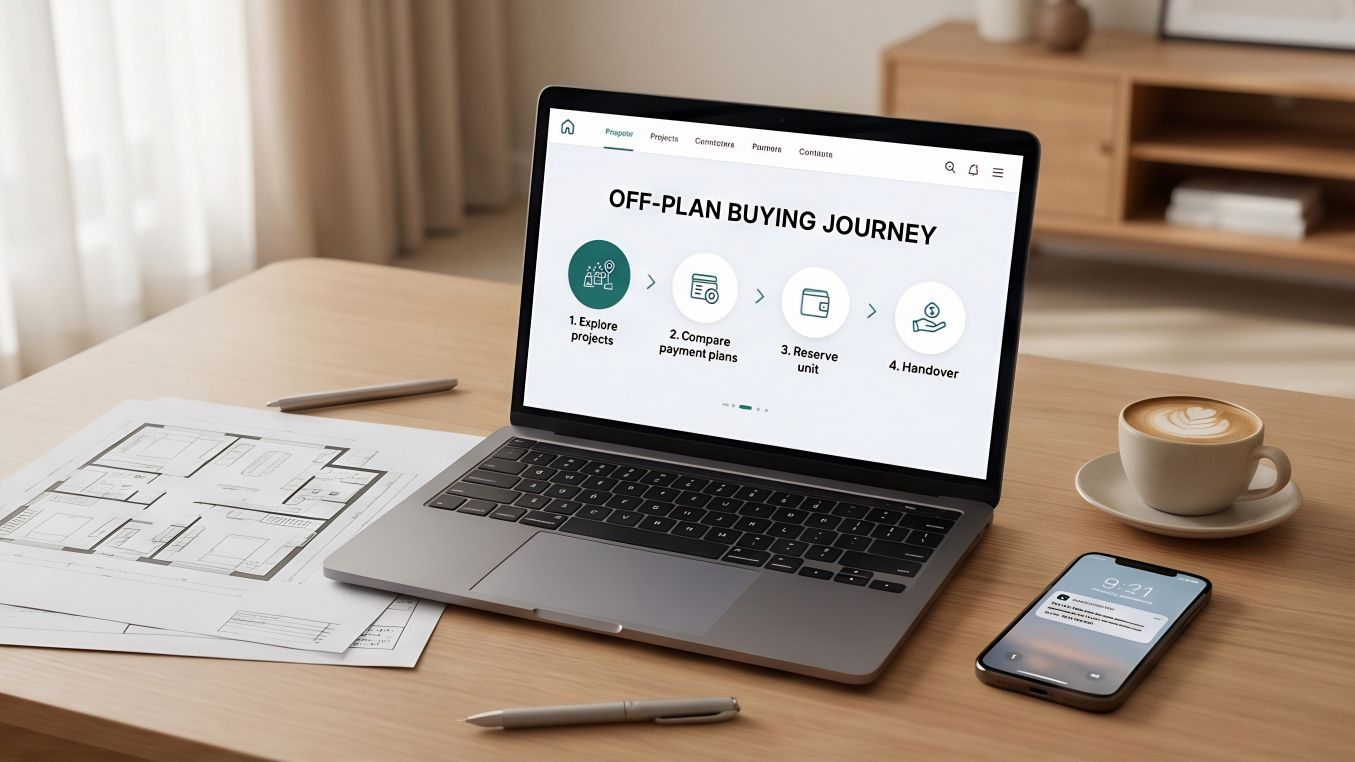
Although the purchase occurs before completion, the process itself follows a structured legal framework.
Step 1: Choose a project and developer
Buyers review available projects, floor plans, community features, and developer reputation.
Step 2: Reserve the property
During the pre-launch phase, buyers may reserve a unit by submitting an Expression of Interest (EOI) or reservation amount. This amount is typically refundable if the buyer decides not to proceed or if the unit does not meet expectations at launch.
Once the project is officially launched, the down payment is required and is non-refundable. Any withdrawal after this stage may result in penalties as per the developer's terms.
Step 3: Sign the SPA
The Sale and Purchase Agreement (SPA) defines the payment schedule, completion timeline, and legal terms of the transaction.
Step 4: Follow the payment plan
Payments are made according to construction milestones outlined in the SPA. In many cases, buyers submit post-dated checks (PDCs) at the time of signing, which are used to schedule instalment payments throughout the construction period.
Step 5: Property handover and title deed
Until full payment is completed, the property is registered under Oqood (interim registration). Once all payments are cleared, the buyer receives the official title deed issued by the Dubai Land Department.
Understanding these stages helps buyers prepare financially and avoid surprises during construction.

Key Factors to Evaluate Before Buying
Off-plan projects can perform very differently depending on several factors. Buyers should approach the decision with a structured evaluation process.
The most important considerations include the following:
Developer track record and completed projects
Construction timeline and delivery history
Location and surrounding infrastructure
Payment plan structure
Future supply in the same area
Examining these fundamentals helps buyers identify projects with stronger long-term potential.
Off-Plan vs Ready Property
Off-plan and ready properties serve different investment and lifestyle strategies.
Property Type |
Key Characteristics |
|---|---|
Off-plan property |
Lower entry price; payment plan during construction; potential appreciation before completion; only a fraction of the purchase price may be required to become the legal owner under the SPA and Oqood framework. |
Ready property |
Immediate ownership transfer; full visibility of building quality; rental income possible immediately; full settlement typically required at transfer per MOU. |
Buyers seeking long-term value growth often consider off-plan developments, while those prioritizing immediate rental income or occupancy may prefer completed properties.
Understanding the Risks
While Dubai's regulatory framework provides strong protections, buyers should still understand the potential risks associated with off-plan investments.
Common risks include:
Construction delays
Changes in market conditions before completion
Execution quality depending on the developer
These risks can often be mitigated by selecting reputable developers, evaluating the surrounding infrastructure plans, and comparing pricing with nearby ready properties.
Choosing the Right Project and Developer
Successful off-plan investments usually share several characteristics.
Projects located in growth corridors with improving infrastructure, developed by reputable companies, and priced competitively relative to existing properties tend to perform more consistently.
Mixed-use communities and master-planned districts also tend to generate stronger long-term demand because they combine residential, retail, and lifestyle infrastructure.
Taking time to evaluate these fundamentals can significantly improve investment outcomes.