

Introduction
Buying property in Dubai has become one of the most accessible real estate investments globally. The city offers strong legal protection for buyers, a wide selection of freehold communities, and options that suit both end-users and investors.
In 2026, the process is also more digital, transparent, and data-driven than ever before. Buyers can compare properties across ready homes and off-plan projects.
This guide explains how buying property in Dubai works today, what to expect during the process, and how to approach the market with clarity.
This guide is based on:
Dubai Land Department (DLD) procedures
Standard market practices used in UAE transactions
Real buyer workflows across ready and off-plan segments

Why Buy Property in Dubai?
Dubai continues to attract buyers from around the world due to a combination of economic stability, tax advantages, and strong long-term growth.
Property ownership in the city offers several benefits:
No annual property taxes
Strong rental demand from international residents
Transparent legal ownership through registered title deeds
Access to a wide range of lifestyle communities
Opportunities for both capital appreciation and rental income
Dubai's real estate market also benefits from continued population growth, infrastructure expansion, and international investment flows. As a result, both ready homes and off-plan developments remain highly active segments.
Ready Properties
Ready homes are completed units that can be inspected, transferred, and occupied immediately. Buyers can evaluate the property condition, building quality, and surrounding community before completing the purchase.
Ready homes are often preferred by:
Buyers relocating to Dubai
Investors seeking immediate rental income
Buyers who prefer lower delivery risk
Ownership is transferred through a registered process and culminates with the issuance of a title deed in the buyer's name.
The Step-by-Step Buying Process
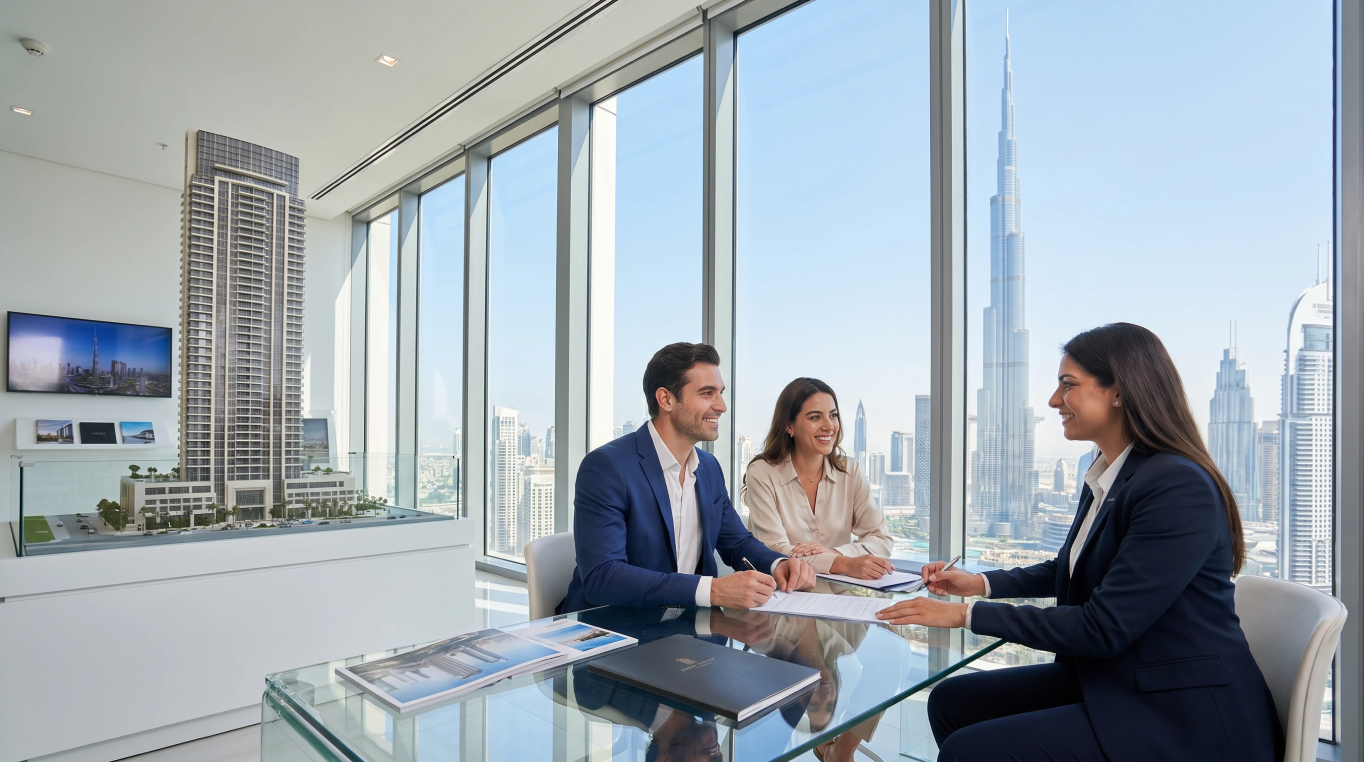
While Dubai's property market is accessible, purchasing real estate still follows a structured process. Understanding each stage helps buyers avoid surprises.
Step 1: Confirm Eligibility and Choose a Freehold/Leasehold Area
Foreign nationals and expatriates can purchase property in designated freehold areas, such as Dubai Marina, Downtown Dubai, Jumeirah Village Circle, Dubai Hills, and Palm Jumeirah. Warsan and Silicon Oasis are examples of leasehold areas.
Ownership in these areas is registered with the Dubai Land Department and confirmed through an official title deed.
Choosing the right area should come before choosing a specific property. Buildings within the same district can vary significantly in service charges, construction quality, and long-term resale demand.
Step 2: Define Your Buying Strategy
Buyers usually fall into one of three broad categories:
Buyers searching for a home with perks like transport accessibility, schools, and healthcare.
Investors targeting income, considering a faster ROI on their investments.
Buyers seeking long-term capital appreciation. Both end-users and investors can benefit from value growth depending on market conditions and demand.
Understanding your needs determines whether to be an end user or investor while selecting a ready property.
Step 3: Evaluate the True Cost of Ownership
In 2026, experienced buyers look beyond the purchase price. As a first step, buyers often obtain a property valuation certificate to understand the fair market value before entering negotiations.
Before proceeding with a transaction, particularly before signing Form B or a Memorandum of Understanding (MOU), it is essential to evaluate the full cost of ownership, not just the property price.
Cost Component |
Typical Amount |
Notes |
|---|---|---|
Property price |
Varies |
Negotiated between buyer and seller |
DLD transfer fee |
~4% of property value |
Paid to Dubai Land Department at transfer |
Registration & trustee fees |
AED 4,000–5,250 |
Depends on property value (above/below AED 500K) |
Real estate agency fee |
~2% of property value + 5% VAT |
Standard market rate |
Mortgage registration fee |
0.25% of loan amount + AED 290 |
Only if financing |
Bank arrangement fee |
~1% of loan amount |
Only if financing |
Annual service charges |
AED 3–30+ per sq ft |
Varies by building age, amenities, management |
DEWA setup & deposit |
AED 2,000–4,000 |
One-time connection for utilities |
Service charges can vary significantly depending on building age, amenities, and management quality. In older buildings, additional refurbishment costs may also affect long-term returns.
Approaching the purchase as a total ownership decision, rather than focusing only on the purchase price or monthly payments, leads to more sustainable and informed investment outcomes.
Step 4: Secure Financing or Budget Clarity
Many buyers in Dubai purchase property with cash, but financing is also widely available through local banks.
Recently, buyers increasingly secure mortgage eligibility or affordability checks before selecting a property. Pre-approval is based on income, credit profile, and financial capacity, helping define clear budget limits and reducing the risk of deals failing at later stages.
For financed purchases, buyers typically receive preliminary approval before property selection, followed by formal underwriting once the property is identified.
Step 5: Agree on Terms and Complete the Transaction
Once a property is selected and an offer is accepted, the transaction moves into a formal documentation stage. The final MOU is documented on the mutual understanding of both parties and their terms.
For ready properties, ownership transfer is finalized through official channels, and the buyer receives a title deed issued by the Dubai Land Department.
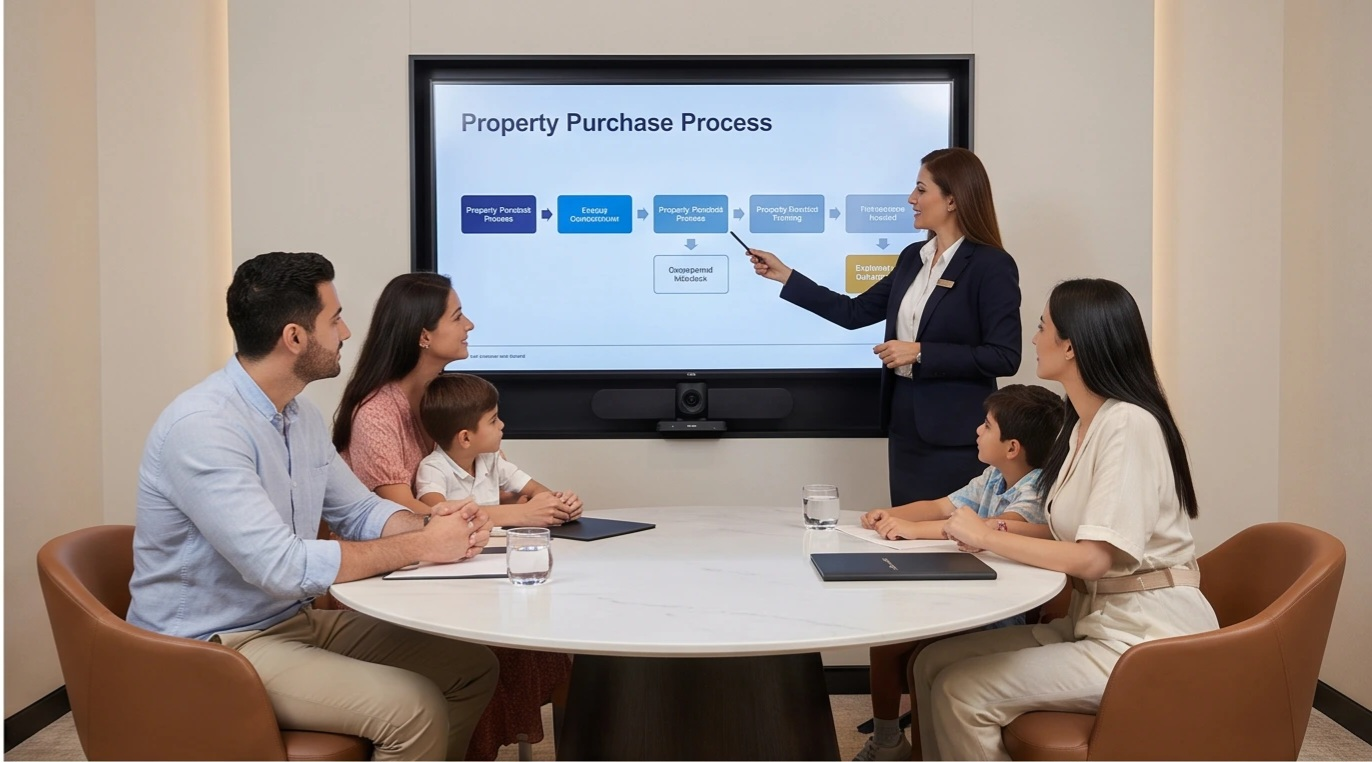
The process is structured, transparent, and designed to ensure proper documentation and registration. Every stage of property transfer is digitalised and directly monitored by DLD.
What Is Driving Buyer Demand in 2026?
Several structural trends continue to influence buying decisions in Dubai.
International buyers remain a major source of demand, particularly from Europe, Asia, and emerging global markets. Currency dynamics, economic stability, and lifestyle migration all contribute to this trend.
Infrastructure investment is also shaping long-term property values. Metro expansion, new commercial districts, and improved transportation links continue to strengthen certain communities.
For buyers, this means connectivity and access to employment hubs remain key drivers of long-term value.
Managing the Most Common Buying Risks
While Dubai's property market is well-regulated, buyers should still approach purchases with discipline.
Common risks include buying based purely on marketing narratives rather than real demand and underestimating ongoing ownership costs.
Here are some ways to manage risks in the secondary market:
Verify ownership and legal documents
Check market price and avoid overpaying
Account for all fees and service charges
Inspect the property condition carefully
Get mortgage pre-approval if needed
Stay on top of the paperwork and approvals
The most successful buyers evaluate who will ultimately live in the property or rent it in the future. Demand fundamentals often determine long-term performance more than short-term hype.
Conclusion
Buying property in Dubai can feel complex at first, but the process becomes straightforward once the steps are understood.
Whether you are considering a ready home or evaluating off-plan projects, access to transparent information makes a significant difference.
Platforms like Proffer allow buyers to explore verified listings from developers and property owners, compare projects across different communities, and approach the purchase process with greater clarity.